When to See Dolphins and Whales in Manuel Antonio
Humpbacks pass twice a year, roughly July to October and December to March. Dolphins are around all year, but no boat can promise either. How to time it.
Humpback whales pass Manuel Antonio twice a year, roughly July to October and again December to March, and a cruise in those months is your best chance to see one. Dolphins are around all year, mostly spotted and bottlenose, though no boat can promise them. Planet Dolphin Catamaran Eco Adventures, the operator whose catamaran we pin on this page, says as much on its own site: sightings aren’t guaranteed.
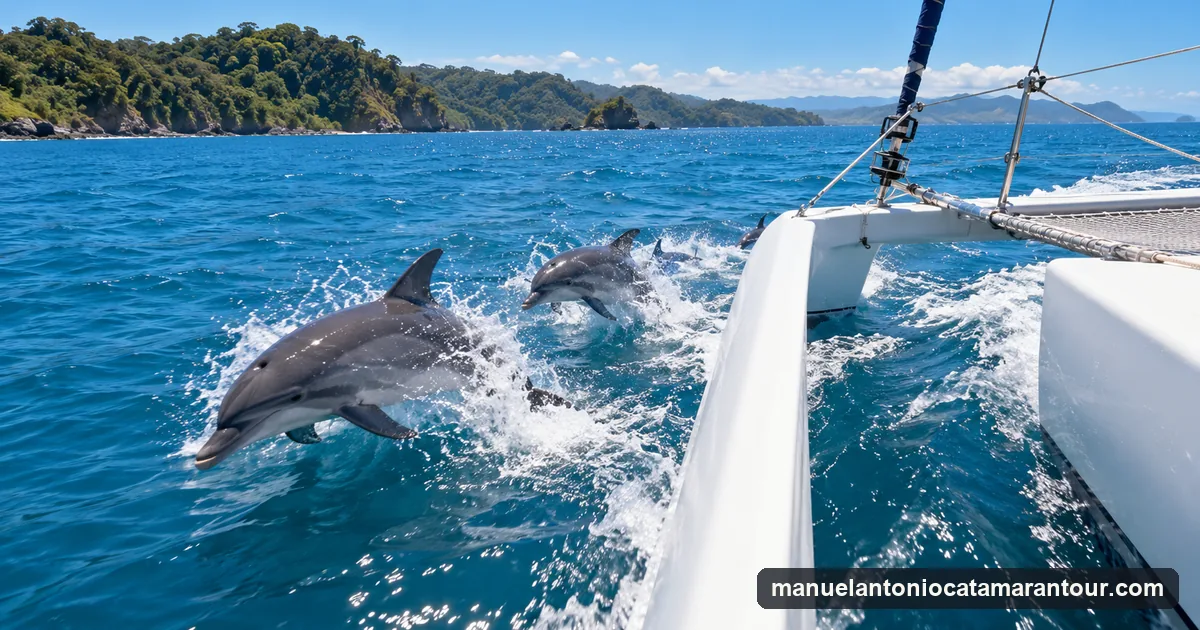
Its trip is the cheapest of the six trips we compare, from about $93 on the booking platform, rated 4.6 from 45 reviews. It’s a 3.5-hour lunch cruise on the operator’s own boat from Marina Pez Vela, with live commentary on board and pickup in Quepos and Manuel Antonio 30 to 45 minutes before departure. An August 2026 reviewer saw dolphins and a whale with her calf; one in March saw dolphins and whales too.
Where can I watch whales in Manuel Antonio?
From the boats. In Manuel Antonio you watch whales from the cruise boats that leave Marina Pez Vela in Quepos, during the two humpback seasons. They all follow the national park’s coast, so pick your month first and your boat second.
Marino Ballena National Park, home of the Whale’s Tail sandbar, is a separate trip about an hour’s drive south, near Uvita. Dedicated whale-watching trips there make a full day from Manuel Antonio.
Two seasons, two populations
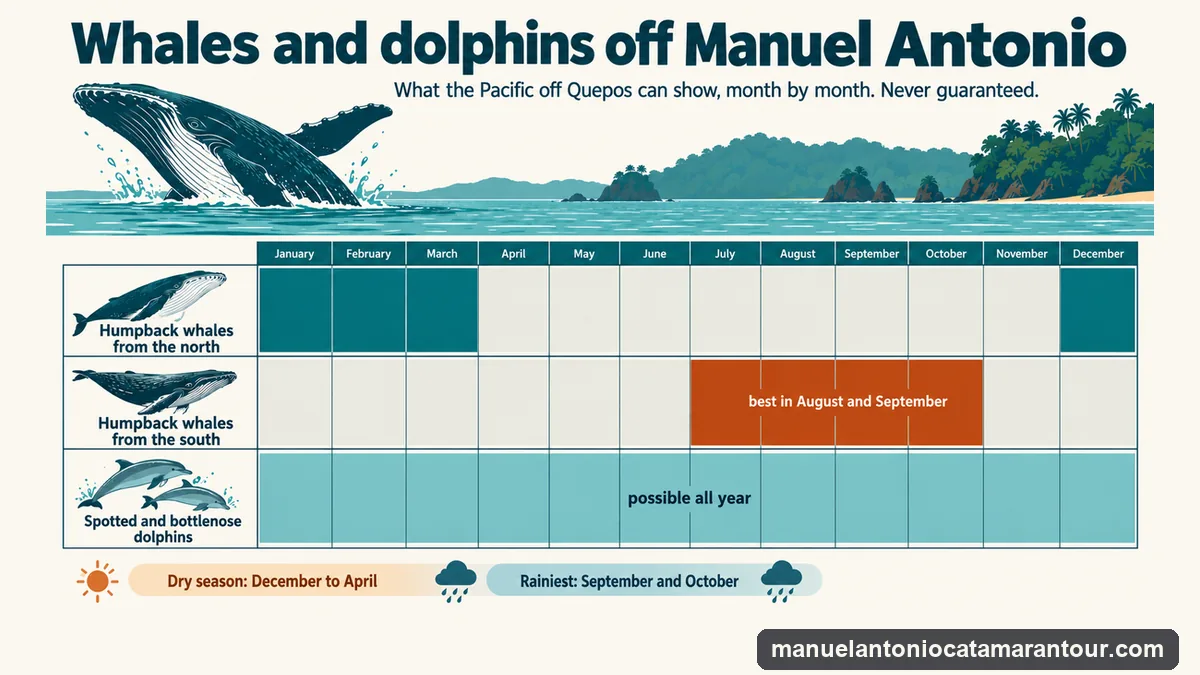
From roughly July to October, humpbacks from the Southern Hemisphere visit this coast, and August and September are the best months. From roughly December to March it’s the turn of Northern Hemisphere humpbacks, the population that feeds off the northwest coast of the United States. Sources draw the edges differently, and some run the southern season into November, so treat the first and last weeks of each window as a maybe.
| Month | Humpbacks | Weather and water |
|---|---|---|
| January | Northern season | Dry; the water is usually clear |
| February | Northern season | Dry; the driest month |
| March | Northern season | Dry |
| April | Edge of the northern season; don’t count on whales | Last month of the dry season |
| May | Between seasons | Green season begins |
| June | Between seasons | Green season |
| July | Southern season begins | Often a drier spell, the veranillo |
| August | Southern season, best month | The veranillo can last into August |
| September | Southern season, best month | One of the two wettest months |
| October | Southern season, tailing off | The wettest month; runoff clouds the water |
| November | Edge of the southern season; don’t count on whales | Transition to the dry season |
| December | Northern season begins | Dry season begins |
Dolphins don’t follow either calendar. Expect them on many trips in any month, and not on every one.
Dolphins
The dolphins you’re most likely to see here are pantropical spotted dolphins, then bottlenose, and the two sometimes travel together in mixed groups. Some operators add spinner dolphins to their lists, but we found no good evidence of how often spinners turn up near Quepos.
Even the operators say they can’t be promised. A July 2026 reviewer on another catamaran saw no whales or dolphins at all, only iguanas on the way to the boat and some pelicans. That’s the trade: often, on many trips, not every time.
Turtles, rays and seabirds
Sea turtles are seen now and then, not on most trips. Manta rays appear on a few operators’ lists; we have no independent account of how often. Brown pelicans, frigatebirds and brown boobies are on every operator’s list, and the small rocky islands off the park are seabird refuges.
Morning or afternoon?
No source we read shows dolphins or whales favouring one time of day, and every boat follows the same stretch of coast. The weather is what changes by the hour. On this coast the rain falls mainly in the afternoon and early evening, and the July to October whale season sits inside the green season, so in those months the morning boat usually gets the drier sky. Some boats sail only in the morning then anyway, and Planet Dolphin’s trip is a lunch cruise.
From December to March the afternoon boats run reliably too, and come back at sunset. Morning or sunset covers that choice.
If your dates fall in August or September, or between December and March, book a boat for those days and treat every whale as a bonus.
Worried about the sea itself? Is a Manuel Antonio catamaran tour safe answers that, including the 2015 sinking people ask about. All six trips are compared on the homepage.
Whale seasons from the IWC Whale Watching Handbook and operator and press accounts, which disagree on the month edges; dolphin species from Planet Dolphin’s species guide; the rain pattern from Costa Rica’s tourism board. Checked October 2026.
Book the Planet Dolphin Catamaran
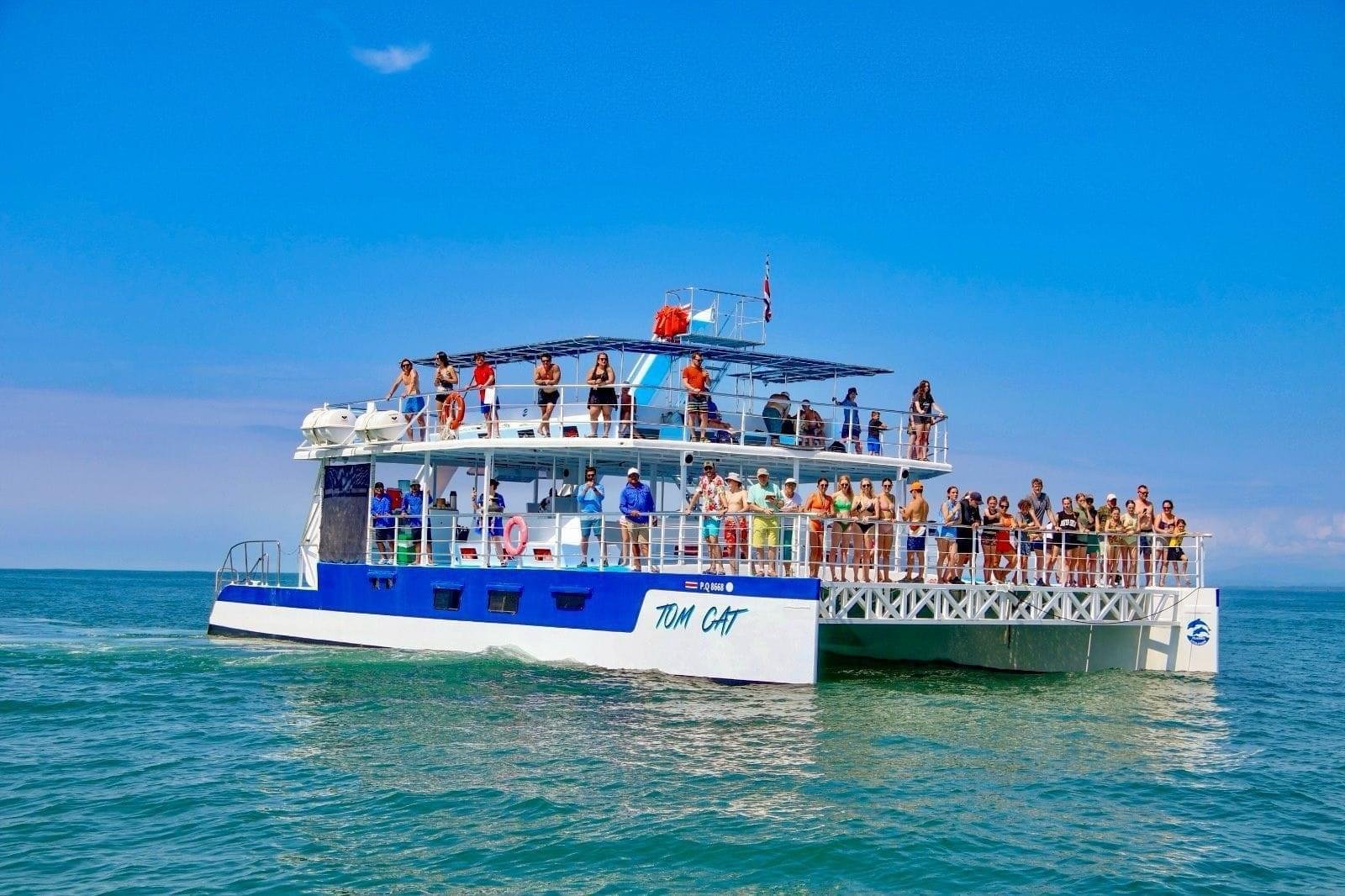
A 3.5-hour lunch cruise from Marina Pez Vela along the national park's coast, with live commentary, a swim and snorkel stop, waterslides and trampoline nets, and pickup in Quepos and Manuel Antonio. Lunch, juices and a limited number of drinks are included.
Check Availability & Book